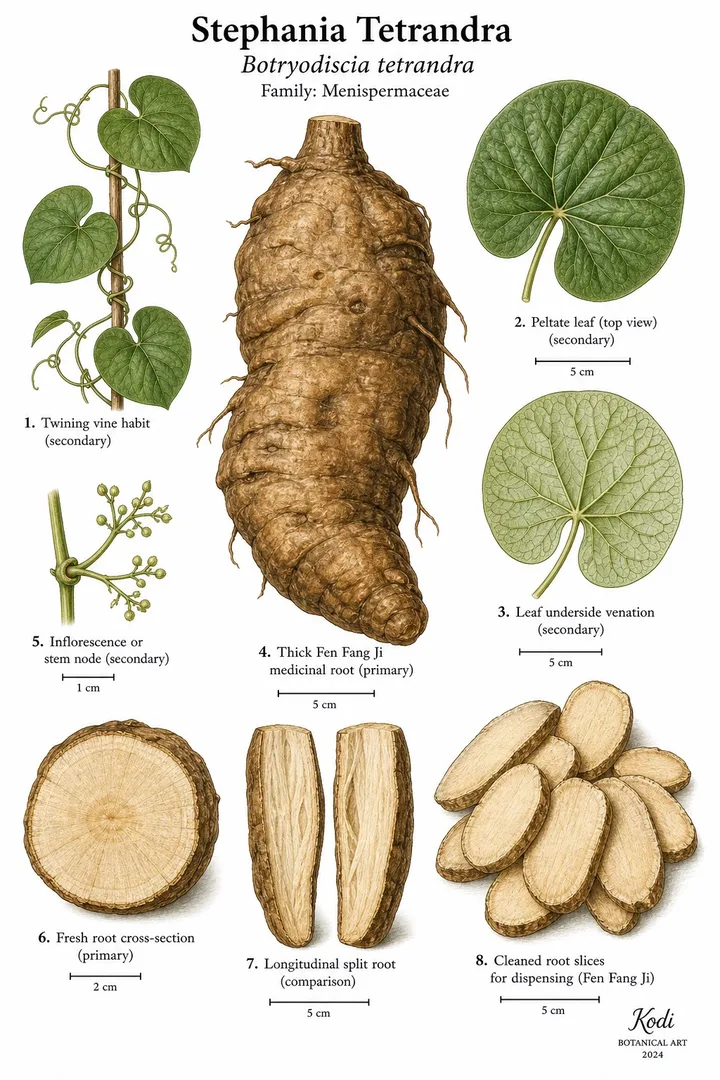
Stephania tetrandra S.Moore
Stephania tetrandra (Fen Fang Ji) is a classical TCM herb for wind-damp painful obstruction -- the traditional category that includes neurological and joint inflammation. Its primary alkaloid, tetrandrine, has significant published research on anti-inflammatory, antiviral, and neuroprotective mechanisms. In Lyme-literate practice, Stephania is used for neurological healing support in late-disseminated and neurological Lyme patterns.
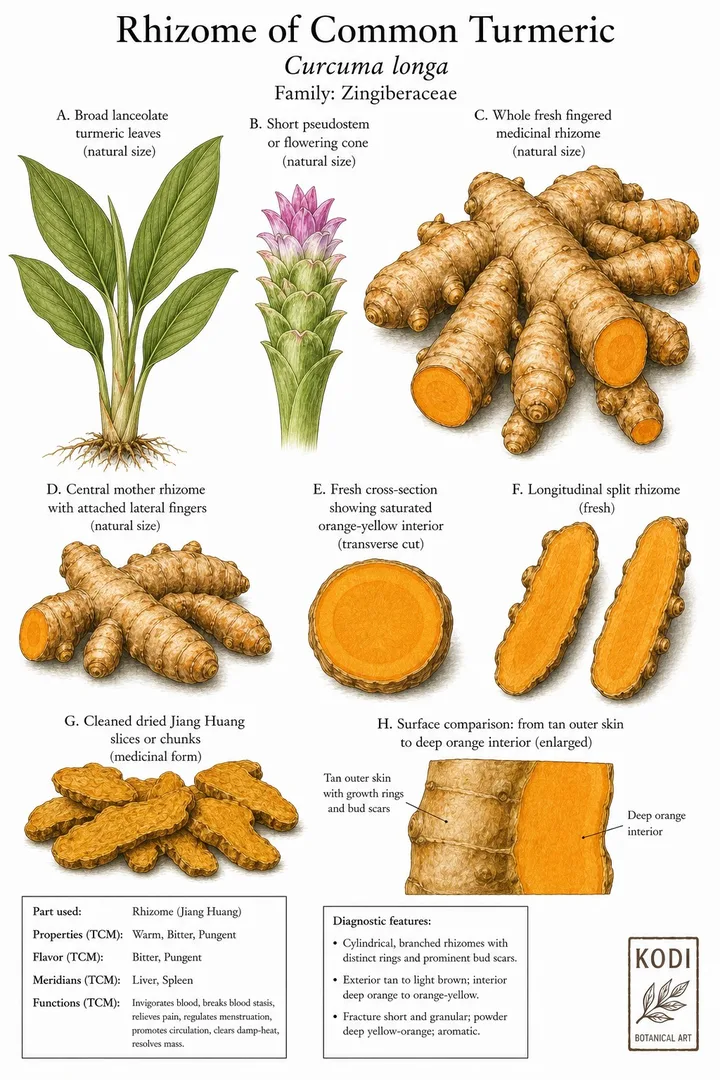
Curcuma longa extract
Curcumin is the primary bioactive polyphenol extracted from turmeric root. It modulates multiple inflammatory pathways simultaneously - including NF-κB, COX-2, and key cytokines - but its clinical impact depends entirely on the formulation. Standard curcumin without a bioavailability enhancer is poorly absorbed; piperine, phospholipid complexes, and nanoparticle delivery systems can increase absorption by up to 2,000%.
| Decision signal |
Stephania Root |
Curcumin |
| Evidence grade |
Emerging |
Moderate |
| Primary health goal |
Immune Healing Support |
Inflammation & Recovery |
| Research focus |
Neuroinflammation and microglial activation support; Anti-inflammatory via calcium channel and NF-kappaB mechanisms; Autoimmune and inflammatory joint pattern support |
Joint comfort and osteoarthritis support; Exercise recovery and DOMS reduction; Systemic inflammation and oxidative stress |
| Studied dose and form |
200--400 mg tetrandrine equivalent daily, or 1--3 mL tincture 3x daily. Use under practitioner supervision -- tetrandrine has a narrow therapeutic window at high doses. Typically part of a b… |
Curcumin + piperine (BioPerine®) ... 500–1,500 mg curcuminoids + 5–20 mg piperine ... With a fat-containing meal; split into 2 doses if >1,000 mg |
| What to check on the label |
Check the label for a clearly named form, disclosed dose and independent testing. |
Formulation is everything with curcumin - this is not a supplement where higher milligrams on the label equals better outcomes. A product with 1,500 mg of unformulated 95% curcuminoid extract and no bioavailability enhancer will produce lower serum concentrations than 500 mg of a… |
| Main safety note |
Use with caution -- high doses may cause pulmonary toxicity (Aristolochic acid contamination risk in poorly sourced products -- verify source is Stephania tetrandra, NOT Aristolochia fangchi); not for long-term unsupervised use; caution in liver disease; avoid in pregnancy. |
Curcumin is well tolerated at standard doses; GI upset (nausea, loose stools) is the most common side effect and usually resolves with dose reduction or taking it with food. Curcumin inhibits platelet aggregation and potentiates anticoagulant and antiplatelet medications (warfari… |
This comparison organizes educational ingredient research. It does not establish that either supplement is appropriate for you and it does not compare a specific commercial product.
