
Stephania Root: Benefits, Dosage & What the Science Says
Stephania tetrandra (Fen Fang Ji) is a classical TCM herb for wind-damp painful obstruction -- the traditional category that includes neurological and joint inflammation. Its primary alkaloid, tetrandrine, has significant published research on anti-inflammatory, antiviral, and neuroprotective mechanisms. In Lyme-literate practice, Stephania is used for neurological healing support in late-disseminated and neurological Lyme patterns.
Compare with another supplement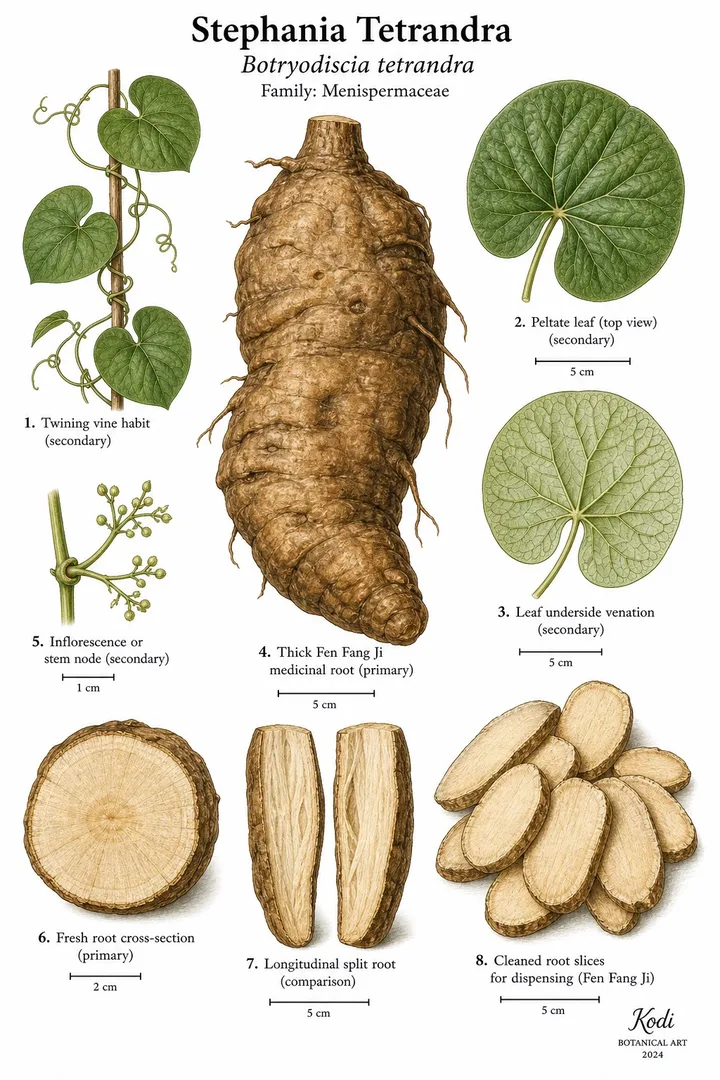
Decision snapshot
What matters before you buy
- Evidence
- Emerging
- Studied dose
- 200--400 mg tetrandrine equivalent daily, or 1--3 mL tincture 3x daily. Use under practitioner supervision -- tetrandrine has a narrow therapeutic window at high doses. T…
- Quality marker
- Look for a clearly disclosed form, useful dose and independent testing.
- Safety check
- Use with caution -- high doses may cause pulmonary toxicity (Aristolochic acid contamination risk in poorly sourced products -- verify source is Stephania tetrandra, NOT Aristolochia fangchi…
What Is Stephania Root?
Potent TCM anti-inflammatory and neuroprotective herb for Lyme neurological healing
Evidence-Based Benefits
- Neuroinflammation and microglial activation support
- Anti-inflammatory via calcium channel and NF-kappaB mechanisms
- Autoimmune and inflammatory joint pattern support
Recommended Dosage
200--400 mg tetrandrine equivalent daily, or 1--3 mL tincture 3x daily. Use under practitioner supervision -- tetrandrine has a narrow therapeutic window at high doses. Typically part of a broader Lyme protocol rather than used as a standalone herb.
Safety, Side Effects & Interactions
Works Well With
Research suggests Stephania Root may complement:
Traditional Use
References
- Tetrandrine neuroprotective mechanisms: review - PMID:29625218
- Stephania tetrandra anti-inflammatory activity - PMID:20951629
- Tetrandrine calcium channel blockade and immune modulation - PMID:9855467
- Fangchinoline and Borrelia: antimicrobial activity data - PMID:32483145
Last reviewed: June 6, 2026. For informational purposes only. See full disclaimer. These statements have not been evaluated by the Food and Drug Administration. This product is not intended to diagnose, treat, cure, or prevent any disease.
AI & Developer Endpoint
/data/supplements/stephania-root.json
This supplement profile ships machine-readable JSON-LD and a structured data endpoint for AI systems and developers.