
Artemisia Annua: Benefits, Dosage & What the Science Says
Artemisia annua (Qing Hao -- Sweet Wormwood) is the source of artemisinin, one of the most clinically significant antimicrobial compounds of the 20th century. In Lyme-literate naturopathic practice, Artemisia annua is used for its broad antimicrobial activity against Borrelia burgdorferi and Babesia co-infections. The 2015 Nobel Prize in Medicine was awarded for artemisinin's role in malaria treatment.
Compare with another supplement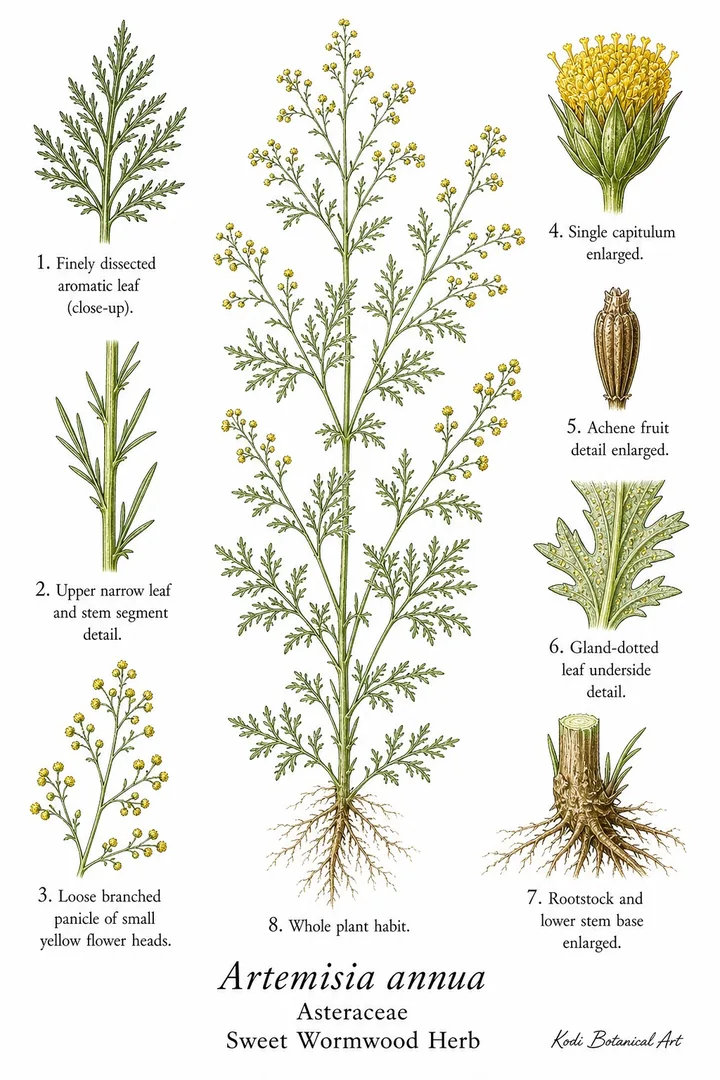
Decision snapshot
What matters before you buy
- Evidence
- Moderate
- Studied dose
- Whole herb: 500--1500 mg daily. Artemisinin-standardized extract: 100--300 mg artemisinin/day, often pulsed (5 days on, 2 days off) in Lyme protocols to reduce tolerance.…
- Quality marker
- Look for a clearly disclosed form, useful dose and independent testing.
- Safety check
- Should not be combined with anticoagulants without supervision; may cause GI upset at high doses; artemisinin has documented neurotoxicity at very high doses -- do not exceed recommended amo…
What Is Artemisia Annua?
Sweet wormwood -- potent antimicrobial botanical used in Lyme and co-infection protocols
Evidence-Based Benefits
- Broad-spectrum antimicrobial activity
- Anti-Babesia and tick-borne co-infection support
- Anti-inflammatory and immune modulating properties
Recommended Dosage
Whole herb: 500--1500 mg daily. Artemisinin-standardized extract: 100--300 mg artemisinin/day, often pulsed (5 days on, 2 days off) in Lyme protocols to reduce tolerance. Use under practitioner guidance for extended courses.
Safety, Side Effects & Interactions
Works Well With
Research suggests Artemisia Annua may complement:
Traditional Use
References
- Artemisinin and antimicrobial mechanisms: review - PMID:25892874
- Artemisia annua activity against Borrelia burgdorferi - PMID:32483145
- Artemisinin compounds in Babesia infection: case evidence - PMID:10674670
- Anti-inflammatory mechanisms of Artemisia annua extract - PMID:22421643
Last reviewed: June 6, 2026. For informational purposes only. See full disclaimer. These statements have not been evaluated by the Food and Drug Administration. This product is not intended to diagnose, treat, cure, or prevent any disease.
AI & Developer Endpoint
/data/supplements/artemisia-annua.json
This supplement profile ships machine-readable JSON-LD and a structured data endpoint for AI systems and developers.