
Rhodiola Rosea: Benefits, Dosage & What the Science Says
Rhodiola rosea is a Tibetan and highland Chinese adaptogen whose salidroside and rosavin compounds regulate the stress response at the HPA and sympathoadrenal axes. Clinical trials support its use for burnout, mental fatigue, and altitude-related stress.
Compare with another supplement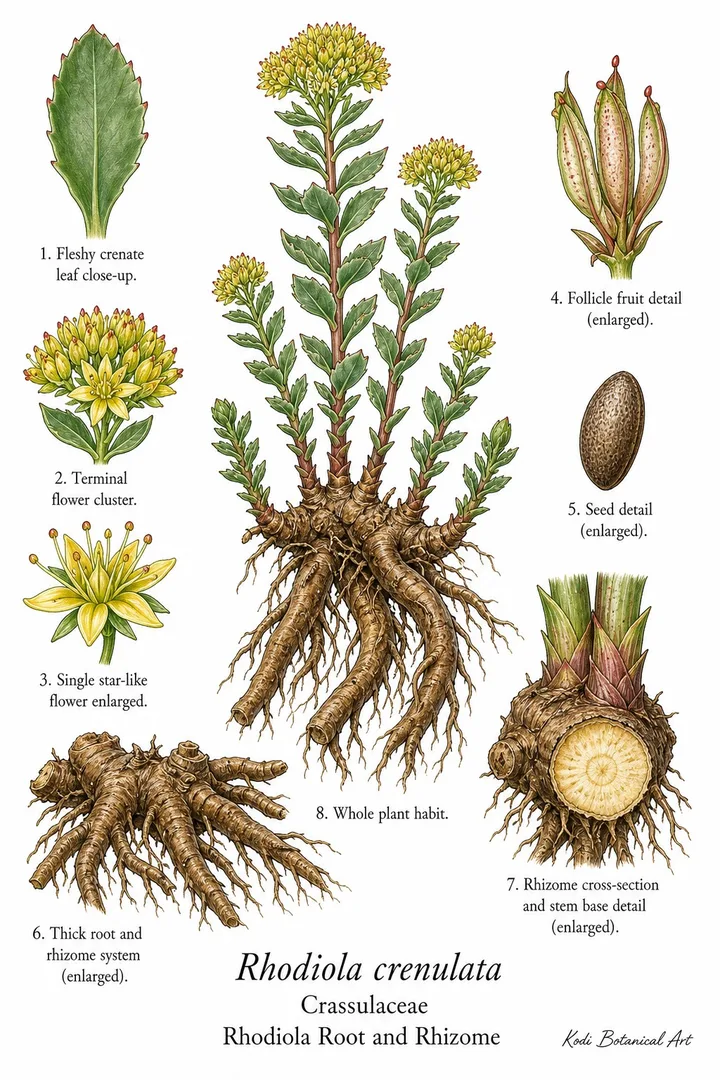
Decision snapshot
What matters before you buy
- Evidence
- Moderate
- Studied dose
- 300--600 mg daily of standardized extract (3% rosavins / 1% salidroside); take in the morning or before cognitively demanding work. Avoid late-evening dosing.
- Quality marker
- Look for a clearly disclosed form, useful dose and independent testing.
- Safety check
- Generally well tolerated; may cause mild activation or insomnia if taken late in the day; use with caution in bipolar disorder; no serious drug interactions confirmed at standard doses.
What Is Rhodiola Rosea?
High-altitude adaptogen for stress resistance and mental endurance
Evidence-Based Benefits
- Mental fatigue and burnout resistance
- Mood support and emotional resilience
- Physical endurance and recovery
Recommended Dosage
300--600 mg daily of standardized extract (3% rosavins / 1% salidroside); take in the morning or before cognitively demanding work. Avoid late-evening dosing.
Safety, Side Effects & Interactions
Works Well With
Research suggests Rhodiola Rosea may complement:
Traditional Use
References
- Rhodiola rosea for mental fatigue: a randomized controlled trial - PMID:19016404
- Salidroside and stress-axis regulation: a review - PMID:22643043
- Rhodiola rosea in burnout: pilot clinical study - PMID:22297986
- Adaptogenic effects of Rhodiola on physical performance - PMID:10839209
Last reviewed: June 6, 2026. For informational purposes only. See full disclaimer. These statements have not been evaluated by the Food and Drug Administration. This product is not intended to diagnose, treat, cure, or prevent any disease.
AI & Developer Endpoint
/data/supplements/rhodiola-rosea.json
This supplement profile ships machine-readable JSON-LD and a structured data endpoint for AI systems and developers.